Evaluating Your Energy Luxury Item Mental Health for Stitch
As a designer who spends half my life digitizing and the other half staring at hoop marks on finished garments, I approach every new machine embroidery design with a mix of curiosity and skepticism. We have all been there: you download a file that looks stunning on the screen, only to watch it pucker, distort, or lose its charm once the needle hits the fabric. Today, I am taking a close look at Your Energy Luxury Item Mental Health, a graphic asset marketed primarily as a T-Shirt Design, to see how it holds up when translated from digital pixels to physical thread.
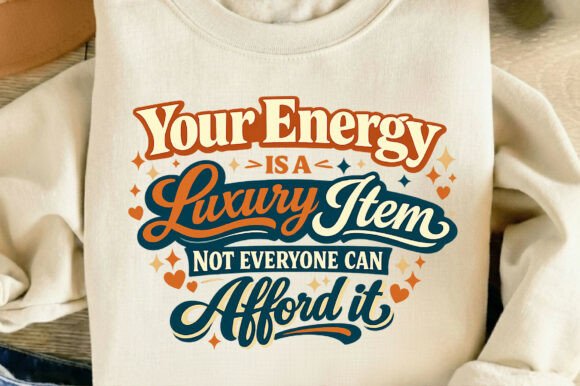
The first impression of this piece is striking. It carries a mood that is both assertive and soothing, blending the concept of self-care with a touch of high-end aesthetic appeal. The layout suggests a modern, minimalist approach, which is crucial for embroidery. In my experience, overly complex Graphics often fail in stitching because they rely on gradients or fine details that threads simply cannot replicate. However, the structural integrity of Your Energy Luxury Item Mental Health appears robust enough to handle the transition from print to stitch, provided we make the right technical adjustments.
Real-World Application: The Custom Tote Test
To truly evaluate a design, you must imagine it on a product. I recently considered this motif for a custom order involving canvas tote bag design projects. The client wanted a series of bags for a local wellness workshop, and the theme needed to resonate with mindfulness and personal value. Your Energy Luxury Item Mental Health fit the brief perfectly. The text-heavy nature of the design, combined with its symbolic elements, creates a statement piece rather than just a decorative accent.
When planning this embroidery project, I visualized the design centered on the front panel of a heavy-duty cotton tote. The boldness of the message requires a fabric that can support the weight of the stitches without warping. For a handmade product like this, the perceived value increases significantly when the embroidery is crisp and well-defined. Customers do not just buy the bag; they buy the feeling of owning something crafted with intention. This design supports that narrative by acting as a wearable affirmation.
Stitching Strategy and Technical Considerations
Translating a PNG-based T-Shirt Design into an embroidery file requires careful digitizing decisions. Since the original product description highlights it as a graphic for apparel, we must assume the lines are clean but may need optimization for thread. Here is how I would approach the stitching process:
- Stitch Type Selection: For the textual elements of Your Energy Luxury Item Mental Health, a combination of satin stitch for smaller letters and fill stitch for larger blocks is ideal. Satin provides a smooth, glossy finish that feels luxurious to the touch, aligning with the "Luxury Item" aspect of the name. However, if the text is very small, switching to a single running stitch or a bean stitch can prevent bulk and improve readability.
- Thread Colors: The mood of mental health awareness often benefits from calming palettes. I recommend testing soft pastels or deep, grounding earth tones. High-contrast thread colors against dark fabrics can make the design pop, but ensure the contrast does not feel aggressive. The goal is harmony.
- Stitch Density: This is critical. If the design has dense areas, reducing the stitch density slightly can prevent the fabric from puckering. This is especially important for stretchy materials like jersey knits used in sweatshirt embroidery or custom apparel.
Fabric Compatibility and Hoop Constraints
Not every surface is suitable for every design. While Your Energy Luxury Item Mental Health is versatile, I advise caution with certain materials. For instance, using this on thin, slippery fabrics like silk or rayon requires a high-quality cut-away stabilizer to maintain shape. Without proper support, the tension of the threads will distort the message, ruining the professional look of your finished product.
Additionally, consider the hoop size. If you are working with a standard 4x4 inch hoop, you may need to scale the design down, which could compromise the legibility of finer details. For larger statements, such as on the back of a jacket or a full-front tote bag design, a 5x7 or 6x10 hoop allows the design to breathe. Always check the dimensions of the original graphic to ensure it fits your machine’s capabilities before purchasing or digitizing.
Challenges with Curved and Textured Surfaces
Applying this design to curved surfaces, such as caps or hats, presents another challenge. The rigidity of the text in Your Energy Luxury Item Mental Health might not conform well to the curve of a cap brim or crown without significant distortion. In these cases, I recommend creating an applique design version. By cutting the shape from fabric and stitching around the edges, you reduce the number of penetrations into the base material, resulting in a cleaner look on textured or curved items like an embroidered patch or a structured hat.
Commercial Viability for Etsy Sellers and Crafters
For Etsy sellers and owners of small shops, the commercial potential of this design lies in its emotional resonance. Mental health awareness is a growing niche, and products that speak to self-care sell well. Whether you are creating baby embroidery items with softer, gentler interpretations or bold holiday embroidery gifts for friends who need a reminder of their worth, this design offers flexibility.
However, transparency is key. Since the source material is described as a PNG for T-shirts, you must verify the licensing terms. Can you sell the digitized digital embroidery file? Or are you only licensed to sell the physical handmade product? Most designers allow the sale of finished items but restrict the resale of the digital file itself. Always confirm this to protect your craft business from legal issues.
Furthermore, when listing these items online, use high-quality printable mockup images or photos of actual stitched samples. Show the texture of the thread. Buyers of design assets and finished goods alike want to see how the fabric texture interacts with the stitches. A flat digital image does not convey the tactile quality that justifies a higher price point for personalized gifts.
Final Verdict and Designer Notes
In conclusion, Your Energy Luxury Item Mental Health is a strong candidate for modern embroidery projects, provided it is treated with technical respect. It is not a plug-and-play solution for every fabric type, but with the right stabilizer, thread choice, and hoop size, it can elevate a simple garment into a meaningful keepsake.
Before you commit to a large batch of commercial embroidery orders, follow these practical steps:
- Test on Scrap Fabric: Always stitch a sample on the exact fabric you plan to use. Check for puckering or thread breaks.
- Check Contrast: View your test stitch in black and white. If the design loses definition, adjust your thread colors for better visibility.
- Inspect Small Details: Zoom in on the finished sample. Are the tiny corners sharp? Is the text readable? If not, simplify the digitizing.
- Confirm Licensing: Ensure you have the right to use the design for commercial sales if you are an Etsy seller or boutique owner.
By treating Your Energy Luxury Item Mental Health as a collaborative partner in your creative process rather than just a static image, you can create personalized gift items and small shop product lines that truly resonate with your customers. The difference between a good product and a great one is often in the details of the stitch.