Mildly Mischievous Devil Ghost Print: A Designer’s Review
As an embroidery designer who spends more time staring at stitch maps than I care to admit, I have developed a keen eye for what translates well from screen to fabric. Not every cute graphic survives the needle. Some designs look adorable on a monitor but turn into a tangled mess of thread breaks and puckering once they hit the hoop. That is why I approach new machine embroidery design acquisitions with a healthy dose of skepticism. Recently, I pulled up the Mildly Mischievous Devil Ghost Print to evaluate its potential for my upcoming autumn collection, and I was pleasantly surprised by its practical versatility.
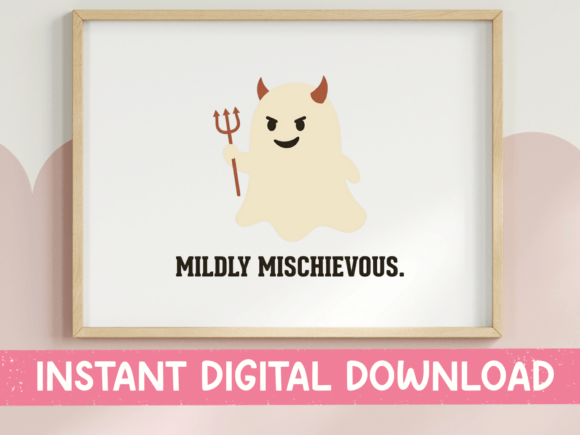
This tiny Halloween print stars a smiling ghost wearing a pair of red devil horns and holding a tiny red pitchfork, with "Mildly Mischievous" lettered cleanly underneath. It is deadpan-funny in the best way possible. But does it work for real-world production? Let us break down how this design performs when you move beyond the digital preview and start stitching.
First Impressions and Visual Personality
The immediate appeal of the Mildly Mischievous Devil Ghost Print lies in its simplicity. In the world of T-Shirt Designs and Graphics, less is often more, especially when dealing with embroidery. The character is compact, featuring clean lines that suggest a manageable stitch count. The mood is playful without being chaotic. For a crafter or Etsy seller, this is crucial. You want a design that communicates a clear emotion—in this case, witty, low-key Halloween spirit—without overwhelming the garment.
The layout is balanced. The ghost sits centrally above the text, creating a natural vertical flow. This structure is ideal for various placements, from the left chest of a hoodie to the center of a tote bag. The visual personality is approachable. It does not scream "spooky"; it whispers "fun." This makes it a safer bet for broader audiences, including those who might shy away from traditional horror imagery.
Real-World Application: The Sweatshirt Test
To truly test a design, you must imagine it on a finished product. I visualized this design on a heather grey crewneck sweatshirt. This is a staple custom apparel item for any small shop product line. The contrast between the white ghost and the grey fabric would be sharp, while the red horns and pitchfork would pop as accent colors.
In this scenario, the Mildly Mischievous Devil Ghost Print shines because of its scale. It is small enough to look sophisticated rather than childish. When I consider sweatshirt embroidery, I worry about bulk. Heavy fill stitches can make a garment feel stiff. However, looking at the clean outlines of this ghost, I suspect it relies heavily on satin stitches for the horns and pitchfork, and perhaps a light fill or running stitch for the ghost body. This suggests a softer hand feel, which customers appreciate in wearable handmade products.
Versatility Across Product Lines
Beyond sweatshirts, this design has legs. Here is where I see it fitting naturally into a diverse catalog:
- Tote Bag Design: Placed on a canvas tote, it becomes a subtle seasonal accessory. The durability of embroidery holds up better than screen printing on rougher fabrics.
- Embroidered Patch: The self-contained shape is perfect for an iron-on or sew-on patch. Patches are high-margin items for craft business owners.
- Baby Embroidery: For a onesie or baby blanket, the "mischievous" angle is gentle enough for infants. Just ensure the thread colors are colorfast.
- Holiday Embroidery: It works for October decor, such as pillow covers or kitchen towels, adding a touch of whimsy to home goods.
Technical Considerations for Stitching
While the design looks promising, practical execution requires attention to detail. As a reviewer, I must point out potential pitfalls. The text "Mildly Mischievous" is a critical element. In embroidery, small lettering can easily become illegible if the stitch density is too high or if the font strokes are too thin. Before committing to a large batch, I strongly advise testing the design on scrap fabric similar to your final material.
Check the thread colors carefully. The red needs to be vibrant against the background. If you are stitching on dark fabric, you may need to adjust the underlay or use a lighter outline to ensure the ghost does not disappear. Conversely, on white fabric, ensure the ghost has enough definition so it does not look like a blank spot.
Fabric and Hoop Constraints
Where should you use caution? Any curved surface, like a cap, requires careful hooping. The Mildly Mischievous Devil Ghost Print is relatively flat, which helps, but you must ensure the stabilizer is appropriate for the stretch of the cap material. For textured fabrics like terry cloth towels, the small details of the pitchfork might get lost. In such cases, increasing the size slightly or using a thicker thread could help maintain clarity.
Also, consider the hoop size. While this is a small design, ensure your machine can handle the specific dimensions without requiring excessive re-hooping if you are doing multi-position projects. Always check the provided embroidery file specifications for exact dimensions and stitch counts, as these vary by digitizer.
Commercial Value and Brand Consistency
For commercial embroidery and digital product sellers, consistency is key. This design offers a professional look that enhances brand trust. It does not look like a clip-art afterthought; it looks intentional. When customers see clean stitching and thoughtful design placement, their perceived value of the finished product increases.
If you are creating printable mockups for your online store, this design photographs well. Its clean lines translate nicely to digital previews, helping you sell the personalized gift angle effectively. Whether you are selling the digital embroidery file itself or the stitched item, the professional presentation of the Mildly Mischievous Devil Ghost Print supports higher price points.
Final Verdict and Designer Notes
Before you load this into your machine, here is my checklist for success:
- Test on Scrap: Always run a test stitch-out to check for thread breaks or nesting.
- Check Licensing: Confirm whether the license allows for commercial use if you plan to sell finished items.
- Stabilizer Choice: Use a cut-away stabilizer for stretchy fabrics like t-shirts and a tear-away for stable woven fabrics like tote bags.
- Contrast Check: View the design in black and white to ensure the shapes are distinct without relying on color.
The Mildly Mischievous Devil Ghost Print is a solid addition to any autumn design assets library. It balances humor with technical feasibility, making it a reliable choice for both novice hobbyists and seasoned apparel decorators. It respects the limitations of the medium while delivering a charming result. For anyone looking to add a touch of witty Halloween flair to their embroidery project lineup, this design earns a spot in the hoop.