Reviewing Cute Spider Clipart for Embroidery Projects
As an embroidery designer who spends half my life digitizing and the other half stitching, I have learned that not every cute graphic translates well to thread. We often fall in love with a design on screen, only to find it puckers, loses detail, or looks muddy once it hits the fabric. Recently, I downloaded the Cute Spider Clipart Collection to evaluate its potential for real-world application. This isn’t just about whether the spiders are adorable—though they certainly are—but whether this set of Illustrations and Graphics can hold up under the needle.
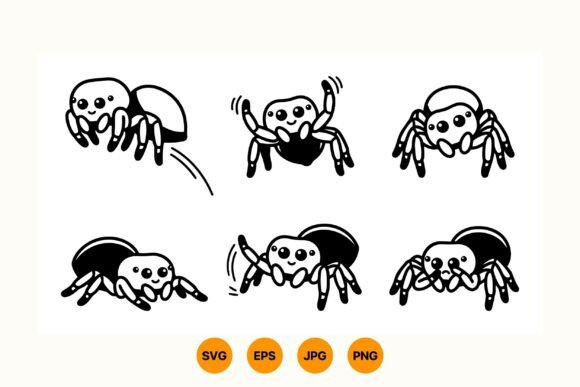
The collection features six expressive spiders in playful poses, rendered in a kawaii line art style. For those of us running small shops or creating personalized gifts, finding assets that balance whimsy with technical feasibility is rare. My goal was to determine if these vectors could serve as reliable bases for machine embroidery designs, particularly for seasonal items like Halloween decor or year-round whimsical apparel.
First Impressions: Mood and Visual Personality
When I first opened the ZIP folder containing the SVG, PNG, and JPG files, the immediate impression was one of approachable charm. The line work is clean, which is crucial. In embroidery, messy lines translate to erratic stitch paths. These spiders have distinct personalities—some shy, some bold—which gives them versatility. They do not look like generic clip art; they feel like characters. This emotional connection is vital for Etsy sellers and craft business owners because customers buy into the feeling a product evokes. A spooky spider might sell in October, but a cute, kawaii spider sells all year round on baby onesies, tote bags, and notebook covers.
The simplicity of the design is its strongest asset. Complex gradients and shading are nightmares for embroidery unless you are doing advanced photo-realistic digitizing. These flat, bold lines suggest that with proper digitizing, they can be executed using standard satin stitch borders and minimal fill stitch interiors. This keeps the stitch density manageable, preventing the fabric from becoming stiff or distorted.
Real-World Application: From Screen to Stitch
To test the viability of the Cute Spider Clipart Collection, I imagined a specific project: a custom embroidered tote bag for a local bookstore’s autumn promotion. Tote bags are typically made of canvas or heavy cotton, which can handle a moderate amount of stitching. I selected one of the spiders with a wide, friendly stance. Because the design is vector-based (SVG), scaling it to fit a 5x7 or 6x10 hoop size was seamless without losing resolution.
In this scenario, the design would work beautifully as a standalone motif or as part of a larger composition. For a sweatshirt embroidery project, I would likely place the spider on the left chest area. The compact nature of the poses means they don’t require massive hoops, making them ideal for custom apparel where space is limited. For baby embroidery, such as on a burp cloth or hat, the soft curves of the kawaii style are perfect. There are no sharp, aggressive angles that might look out of place on infant items.
Another strong use case is the embroidered patch. Patches are trending heavily in the handmade community. By digitizing one of these spiders onto twill fabric with a dense border, you create a durable, iron-on accessory. The clear outlines in the source Graphics make it easy to define the edge of the patch, ensuring a professional finish that doesn’t fray.
Technical Considerations for Embroiderers
While the visual appeal is high, we must discuss the technical translation. Since this product provides image files and vectors, not a pre-digitized machine embroidery design, you will need to digitize it yourself or hire a digitizer. Here is where your experience matters.
Stitch Type Selection: For the bodies of the spiders, a light fill stitch or even a decorative pattern fill could add texture. However, for the legs and eyes, satin stitch is essential. Satin columns provide the crisp definition needed for thin lines. If you attempt to use fill stitches for tiny legs, they will likely merge into a blob. Alternatively, a running stitch could be used for internal details if you want a more sketch-like, hand-drawn aesthetic, which fits the "line art" description perfectly.
Fabric and Stabilizer: When working with textured fabrics like towels or fleece, fine details can get lost. I recommend testing the design on scrap fabric first. For stretchy materials like t-shirts, a cut-away stabilizer is non-negotiable to prevent distortion. On dark fabrics, ensure your thread colors have enough contrast. A black spider on a navy shirt will vanish. This is where the versatility of having multiple poses helps; you can choose a pose with more negative space or add a white underlay to make the colors pop.
Small Hoop Challenges: If you are using a 4x4 hoop, you must be careful with the smallest details. The eyes and mouth expressions are small. If scaled down too much, these elements may cause thread breaks or bird nests. Always check the minimum recommended size for your specific machine and needle combination.
Commercial Viability and Brand Consistency
For small shop product lines, consistency is key. The Cute Spider Clipart Collection offers a cohesive look across all six designs. This allows you to create a series of products—perhaps a matching set of kitchen towels, aprons, and oven mitts—that look like they belong together. This cohesiveness builds brand recognition and trust. Customers are more likely to purchase multiple items if they see a unified design language.
Furthermore, these assets are excellent for creating printable mockup previews for your online store. Before you stitch a single thread, you can place the PNG files onto product photos to gauge customer interest. This saves time and materials. As design assets, they offer high value because they can be used for both physical embroidery and digital printing, maximizing your return on investment.
Final Verdict and Designer Notes
The Cute Spider Clipart Collection is a strong contender for any designer looking to add whimsical, seasonal, or year-round charm to their portfolio. It bridges the gap between childish cute and stylish modern, making it suitable for a wide demographic. However, success depends entirely on how you handle the digitization process.
- Test on Scrap: Always run a test stitch-out on the actual fabric you plan to use. Thread tension and fabric texture vary wildly.
- Check Licensing: Before selling finished items or commercial embroidery products, confirm the license terms included in the download. Ensure you have the right to use these Illustrations for commercial goods.
- Contrast is King: Use high-contrast thread colors. Pastel threads on white fabric may wash out the details of the line art.
- Simplify if Needed: If a specific pose has too many overlapping legs, consider simplifying the digitizing path to reduce jump stitches and trim time.
In conclusion, this collection is not just a set of images; it is a toolkit for creativity. Whether you are making a holiday embroidery gift, a personalized gift for a friend, or stocking your Etsy seller shop with unique tote bag design options, these spiders have the personality and structural integrity to succeed. Just remember: the file is only as good as the digitizing behind it. Take your time, respect the fabric texture, and let the kawaii charm shine through every stitch.